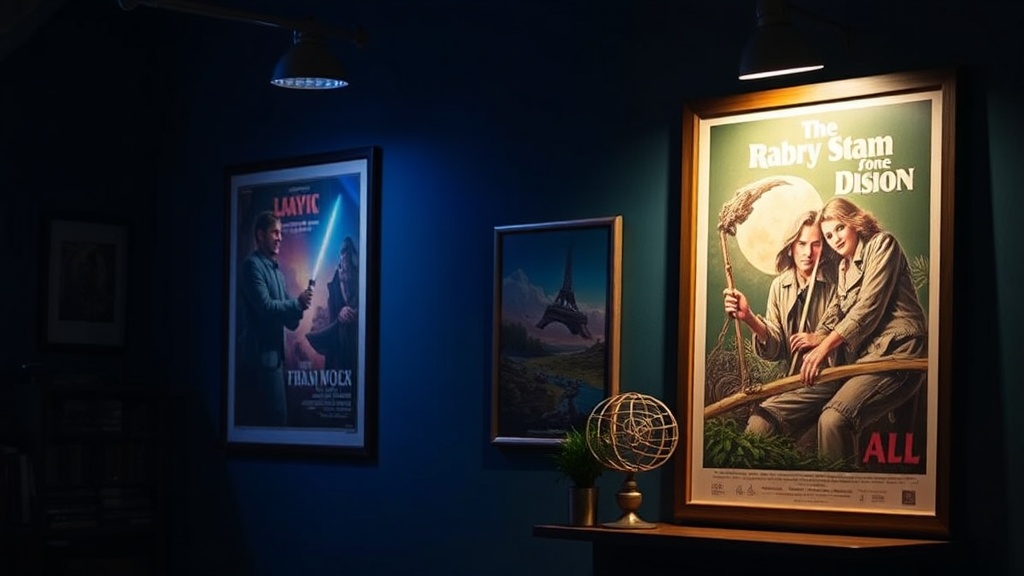
How to Frame Vintage Posters Without Damaging Your Collection

What's the Best Way to Frame a Vintage Poster Without Causing Permanent Damage?
Framing vintage posters requires specific techniques and materials to prevent acid burn, fading, and physical stress that can destroy valuable collectibles worth hundreds—or thousands—of dollars. This guide covers archival mounting methods, UV-protective glass options, and the common mistakes that ruin perfectly good movie posters, travel prints, and concert memorabilia. Whether protecting a 1960s Beatles concert poster or a mint-condition Art Deco travel advertisement, the approach remains the same: acid-free materials, proper mounting, and controlled display environments.
Why Does Regular Framing Destroy Vintage Posters?
Standard framing shops typically use acidic mats, adhesive tapes, and non-UV glass—all of which cause irreversible damage to paper collectibles over time. The damage doesn't appear overnight. It develops gradually, often taking five to ten years before visible yellowing, brittleness, or tape residue becomes apparent. By then, the poster's value has dropped significantly.
Acidic materials (standard cardboard backing, regular mat board, even some "acid-free" products that aren't archival quality) leach chemicals into paper fibers. This causes browning along the edges first—called "mat burn"—then spreads inward. Non-archival tapes create stains that professional conservators charge hundreds of dollars to remove. Regular glass blocks almost no UV light, allowing posters to fade even in rooms with minimal natural light.
Here's the thing: most damage from improper framing is preventable. The materials cost more upfront—expect to pay $150-$400 for proper archival framing versus $80-$150 for standard framing—but the investment protects collectibles that often appreciate in value.
The Hidden Culprits in Standard Framing
- Regular mat board: pH levels below 7.0 cause acid migration into poster paper
- Pressure-sensitive tapes: Scotch tape, masking tape, and even "archival" tapes with rubber adhesives stain and embrittle paper
- Cardboard backing: High acidity and lignin content create brown stains
- Regular glass: Blocks only about 45% of UV radiation
- Direct contact mounting: Posters taped directly to backing boards can't expand and contract with humidity changes
What Materials Do You Actually Need for Archival Poster Framing?
Archival framing requires four specific components: acid-free 4-ply mat board (pH 8.5-9.5), conservation-grade mounting methods, 99% UV-filtering glazing, and inert backing materials like Coroplast or acid-free foam board. These materials work together to create a microenvironment that stabilizes the poster and blocks degradation factors.
Worth noting: "acid-free" doesn't automatically mean "archival." Many products labeled acid-free use calcium carbonate buffering that washes out over time, or they contain lignin (a plant compound that generates acid as it breaks down). True archival materials meet International Association of Sound and Audiovisual Archives (IASA) or ISO 9706 standards for permanence.
Mat Board Specifications
For vintage posters, use 100% cotton rag mat board or purified wood pulp mat with alpha-cellulose content and no groundwood or lignin. Cotton rag (often called "museum board") offers the highest longevity—centuries rather than decades. Brands like Crescent RagMat, Archivart Museum Board, and Bainbridge Alphamat Artcare provide reliable options. Expect to pay $25-$60 per sheet versus $5-$10 for regular mat board.
The mat serves two purposes. It creates space between the poster and glazing—preventing condensation damage and ink transfer. It also provides visual breathing room, typically 2-4 inches of mat visible on all sides.
UV-Protective Glazing Options
| Glazing Type | UV Protection | Weight | Cost (24x36") | Best For |
|---|---|---|---|---|
| Regular glass | 45% | Heavy | $15-$25 | Temporary displays only |
| Conservation clear glass | 99% | Heavy | $40-$60 | High-value posters in stable environments |
| Conservation acrylic (Acrylite OP-3) | 99% | Light | $50-$80 | Large posters, shipping, earthquake zones |
| Museum acrylic (Tru Vue Optium Museum) | 99% | Light | $90-$140 | Museum-grade protection with anti-reflective coating |
Acrylic scratches more easily than glass but won't shatter and damage the poster. For posters larger than 24x36 inches, acrylic becomes necessary—glass that size becomes dangerously heavy and prone to cracking. The anti-reflective coating on premium museum acrylic (Tru Vue Optium) makes a significant difference in viewing experience, nearly eliminating glare.
Backing Materials
Never use cardboard, Masonite, or standard foam board as backing. These materials off-gas acids and trap moisture. Instead, choose:
- Coroplast (corrugated polypropylene): Inert plastic, lightweight, rigid. Used by Northeast Document Conservation Center for photograph storage.
- Acid-free foam board: Look for boards labeled "acid-free" and "lignin-free" with a pH above 7.5. Crescent and Bainbridge make suitable products.
- Fome-Cor: A brand of foam-centered board with paper surfaces—only acceptable if surfaces are archival quality.
How Do You Mount a Vintage Poster Without Using Tape?
Professional conservators use four mounting methods that avoid adhesives touching the poster: corner pockets, edge strips, hinge mounting with Japanese paper and wheat starch paste, and pressure mounting using mat windows. The method depends on the poster's value, condition, and whether you want reversibility.
Corner Pockets (Easiest, Fully Reversible)
Corner pockets hold the poster at each corner using folded strips of acid-free paper or polyester film (Mylar). The pockets attach to the backing board—never to the poster itself. The poster slides in and rests freely without adhesive contact. This method works perfectly for standard-size movie posters, travel prints, and any poster in good condition.
Make pockets from archival-quality Tyvek or heavy archival paper (80lb or higher). Cut strips 2 inches wide, fold to create a 3/4-inch pocket depth, and attach to backing board using archival double-sided tape (3M 415 or Filmoplast P90) placed only on the backing board—never on the poster.
Japanese Paper Hinges (Museum Standard)
For valuable or fragile posters, Japanese tissue hinges provide the most secure mounting with complete reversibility. Using wheat starch paste (not regular glue) and thin Japanese kozo paper, create T-shaped hinges that attach to the poster's upper edge verso (back), then extend to the backing board. The paste activates with water—meaning future conservators can remove it with a damp brush without damaging the poster.
Supplies for this method: Tengujo or Kozo Japanese paper, Lineco wheat starch paste, a clean brush, and distilled water. The Library of Congress preservation guidelines recommend this method for works on paper intended for long-term display.
Pressure Mounting (Best for Very Large Posters)
Very large posters—French "grande" movie posters (47x63 inches), subway panels, oversized travel advertisements—become unwieldy with hinge mounting. Pressure mounting sandwiches the poster between a backing board and a window mat cut to the poster's exact dimensions. The mat overlaps the poster edges by 1/8 to 1/4 inch, holding it flat without any adhesive touching the collectible.
The catch? The frame must remain sealed. If opened, the poster can shift. Use this method only with stable frames that won't be opened frequently.
Where Should You Hang Framed Vintage Posters?
Location matters as much as materials. Even perfectly framed posters deteriorate quickly in wrong environments. The ideal display space maintains relative humidity between 30-50%, temperatures between 65-70°F, minimal natural light, and stable conditions without daily fluctuations.
Environmental Enemies
- Bathrooms and kitchens: Humidity swings cause paper to expand and contract, stressing hinges and creating waviness
- South-facing walls with direct sun: Even 99% UV filtering can't compensate for hours of direct sunlight—move posters to walls with indirect light
- Above heating vents or fireplaces: Heat accelerates chemical degradation and dries paper to brittleness
- Exterior walls in uninsulated buildings: Temperature differentials between the wall and room create microclimates inside the frame
That said, most collectors want to display their posters, not store them in climate-controlled vaults. Practical compromise: rotate displayed posters every 6-12 months, storing alternates in acid-free portfolio cases or Solander boxes in closets or under beds.
Lighting Recommendations
Use LED track lighting or picture lights positioned to minimize direct exposure. LEDs emit no UV radiation and minimal heat. Halogen and incandescent bulbs generate heat that raises local temperature around the frame—avoid them. If using natural light, hang posters on north-facing walls and draw blinds during peak sun hours.
Consider installing UV-filtering film on windows in rooms where posters hang. 3M and Llumar manufacture window films that block 99% of UV rays—adding another protection layer beyond the glazing in the frame.
When Should You Hire a Professional Conservator?
Posters with significant value—original 1930s Travel posters by Roger Broders, mint-condition 1950s boxing style movie posters, signed concert posters by artists like Frank Kozik or Emek—warrant professional framing. Museum-quality framers certified by the Foundation for the Preservation of Photographic and Film Materials or the Professional Picture Framers Association understand collection care standards that retail framers often don't.
Expect to pay $300-$800 for professional archival framing of a standard 24x36 poster, and $800-$2,500 for oversized pieces. That sounds expensive—until you compare it to conservation treatment for acid burn or tape damage, which runs $500-$2,000, or the total loss of value for a damaged rare poster.
Ask prospective framers specific questions: "What pH is your mat board?" "Do you use Japanese paper hinges or corner pockets?" "What percentage of UV protection does your glazing provide?" If they can't answer immediately—or if they suggest dry-mounting (irreversible heat-activated adhesive)—take your poster elsewhere.
Resources for Finding Professionals
The American Institute for Conservation maintains a directory of conservators by specialty. The Professional Picture Framers Association offers a "Certified Picture Framer" credential—look for the CPF designation.
For DIY framers, suppliers like University Products, Light Impressions, and Gaylord Archival sell complete archival framing kits with pre-cut mats and proper materials. You'll spend an afternoon learning proper techniques—but your collection will thank you for decades.
Steps
- 1
Choose Acid-Free Materials and UV-Protective Glass
- 2
Mount Your Poster Using the Archival Hinge Method
- 3
Seal the Frame and Hang Away from Direct Sunlight